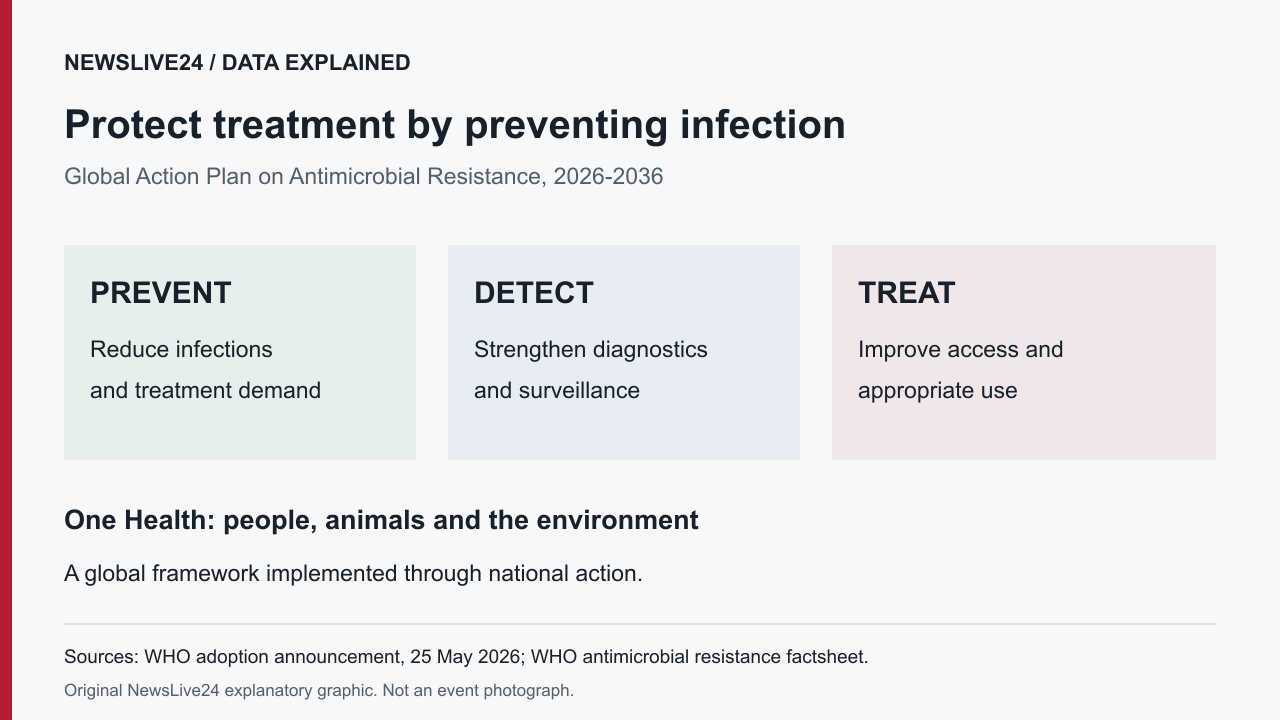
The World Health Assembly adopted its revised antimicrobial-resistance plan on May 23, 2026, setting a framework through 2036. WHO's May 25 announcement put infection prevention at its centre, alongside responsible use of medicines and cooperation across human, animal and environmental health.
The practical scope extends beyond prescribing. Clean water, sanitation, vaccination and infection control can reduce the infections that create demand for treatment in the first place. The plan brings those measures into the same policy discussion as surveillance, research and the financing of national programmes.
Drug resistance occurs when pathogens no longer respond to medicines used against them. WHO's July explanation identifies both inappropriate use and inadequate access to diagnostics and effective treatment as contributors to the problem. That combination makes a simple instruction to use fewer medicines an incomplete public-health response.
Reducing avoidable antimicrobial exposure and securing necessary care require different measures. A programme tracking only doses dispensed could miss whether patients obtained appropriate treatment or diagnostic testing. Infection prevention adds another measure: how much need for treatment was avoided.
WHO's July account also distinguishes the global plan from its implementation through national action plans. It identifies six connected objectives, including laboratory surveillance, prevention, access and appropriate use, research, public awareness and accountable financing. The design links the ability to recognise resistance with the ability to respond to it.
The Assembly's formal decision creates a reporting timetable: the Director-General is to report on implementation in 2027, 2029 and 2031. Those checkpoints give the decade-long framework nearer-term moments for scrutiny. Its central policy choice is to treat effective antimicrobial treatment as something protected by hospitals, laboratories, agriculture and environmental systems together, rather than by a new drug alone.