A person claiming to come from the future would need more than a prediction that sounds impressive after an event. In a paper first submitted in December 2013, Robert Nemiroff and Teresa Wilson turned that problem into a search: could online records contain information appearing before it should have been available? Their project found no time travellers, but did not claim to disprove all possible time travel.
The researchers looked for early references to Comet ISON and Pope Francis, examined search activity and invited communications dated before their request. Those tests depended on both the content and its timing. A correct name appearing after the relevant event would not count, regardless of how confidently someone later described it as a prediction.
The paper also encountered a mundane obstacle: an old webpage can display newer material. Recent advertisements appeared on older stories, while some social posts could be backdated. Search tools were not uniformly comprehensive. These limitations make a displayed date an inadequate substitute for an independently established publication history. They also restrict what the unsuccessful search can tell us.
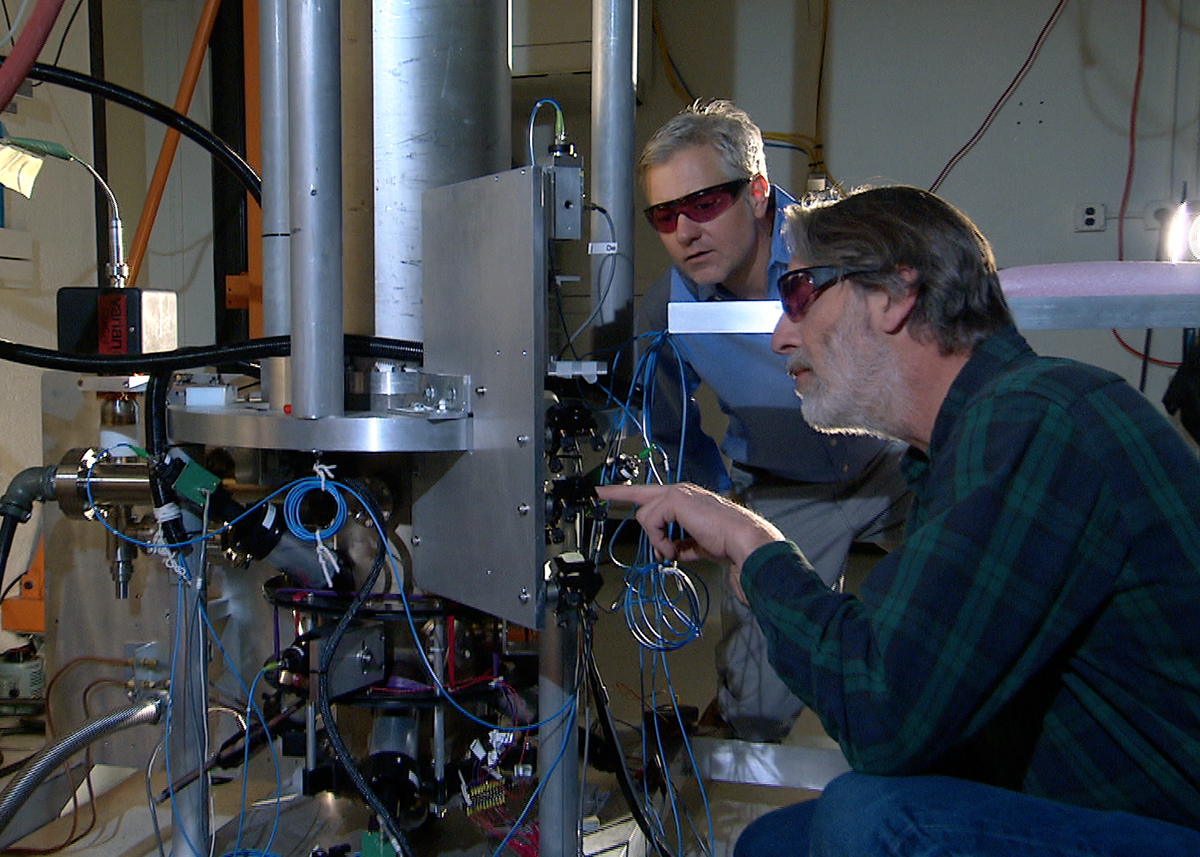
Time itself nevertheless behaves in ways that everyday experience does not reveal. In February 2022, NIST reported a JILA experiment measuring gravitational time dilation across a millimetre-scale cloud of ultracold strontium atoms. Researchers compared frequencies in different regions of the sample. This was a measurement of how clocks run at different elevations, not a message arriving from tomorrow.
According to NIST's explanation of general relativity, a clock lower in Earth's gravitational field ticks more slowly. The effect is tiny at laboratory height differences but measurable with sufficiently precise equipment. Relativistic corrections also have practical importance for satellite navigation. The experiment therefore tests a defined physical relationship rather than a storyteller's claimed itinerary through history.
These investigations address separate questions. Atomic clocks provide repeatable evidence that elapsed time depends on physical conditions; the Internet study tested whether particular traces of advance knowledge could be found. Neither result authenticates an unnamed viral account. The interesting boundary is between a measured difference in clock rates and information supposedly travelling backwards: evidence for the first cannot simply be transferred to the second.