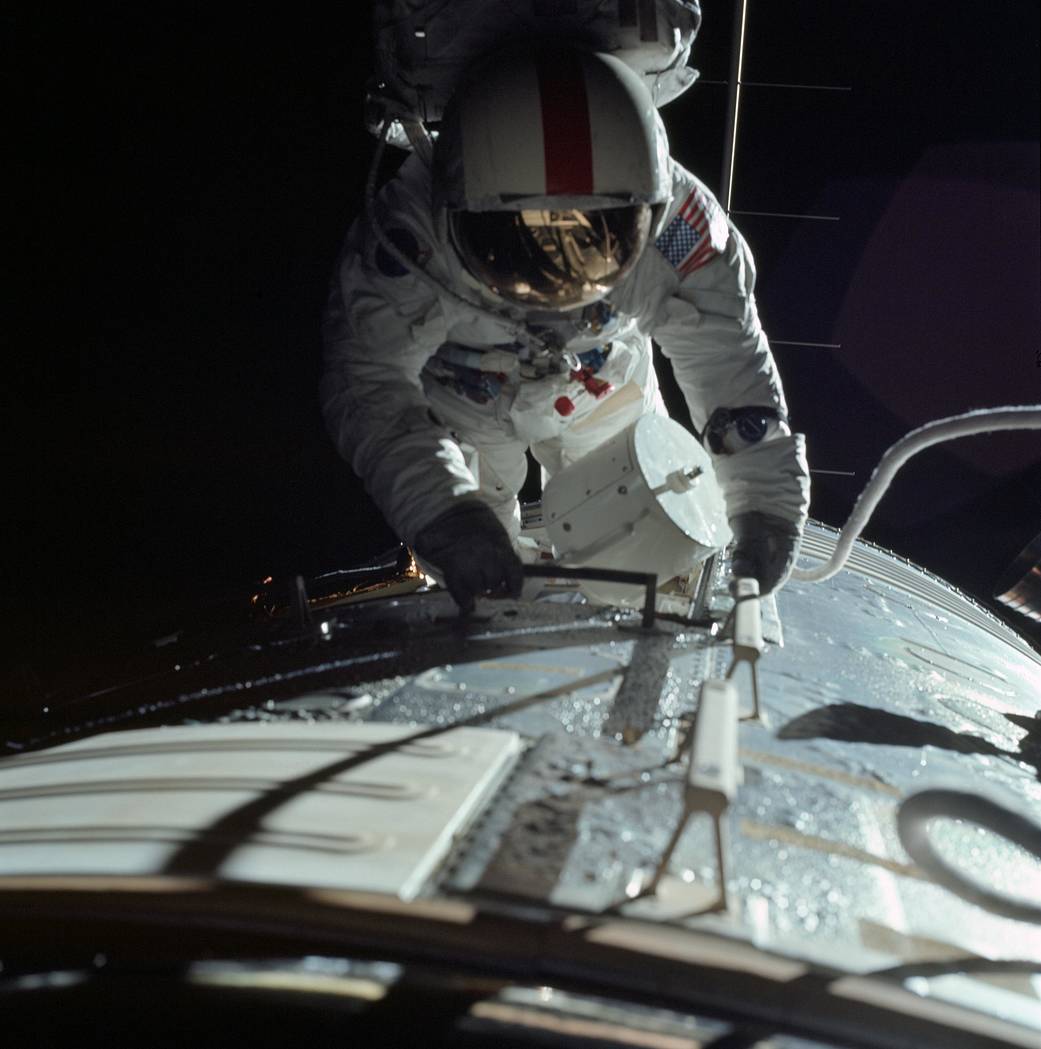
Apollo 18 appears in genuine NASA planning records. That does not make it a flown mission. The documented history is of a lunar programme shortened by budget decisions, with later assignments and mission numbers changed as the remaining flights were reorganised. No evidence in the sources examined establishes the alleged secret expedition or an encounter with extraterrestrial life.
NASA's account of the 1970 decisions places the cancellation of Apollo 20 in January and further reductions in September. Apollo 17 consequently became the final Apollo lunar landing in December 1972. A schedule showing later flights is a record of an intention at that stage of planning, not proof that the schedule was carried out.
The agency's catalogue of cancelled missions makes a particularly useful qualification about crews: none was officially assigned to those cancelled flights. The familiar lists of astronauts are projections from the normal rotation, under which a backup crew might become a prime crew three missions later. Presenting those lists as the manifest of a hidden launch strips away the catalogue's explicit uncertainty.
The same catalogue explains another source of ambiguity. Apollo-Soyuz is sometimes called Apollo 18, but that name refers to a different undertaking, not the cancelled Moon landing. Vance Brand later flew on Apollo-Soyuz, while Harrison Schmitt was reassigned to Apollo 17. Personnel continuing their careers is not evidence that an abandoned lunar assignment secretly went ahead.
NASA's broader history also records a shift to Skylab: the workshop launched in 1973 and received three crews. The Apollo-era story did not simply stop when lunar landings ended. Confusing continued use of people and spacecraft technology with continuation of the cancelled lunar schedule creates an extra mission that the records themselves do not describe. The important historical distinction is between a proposed flight, a revised programme and an executed mission.