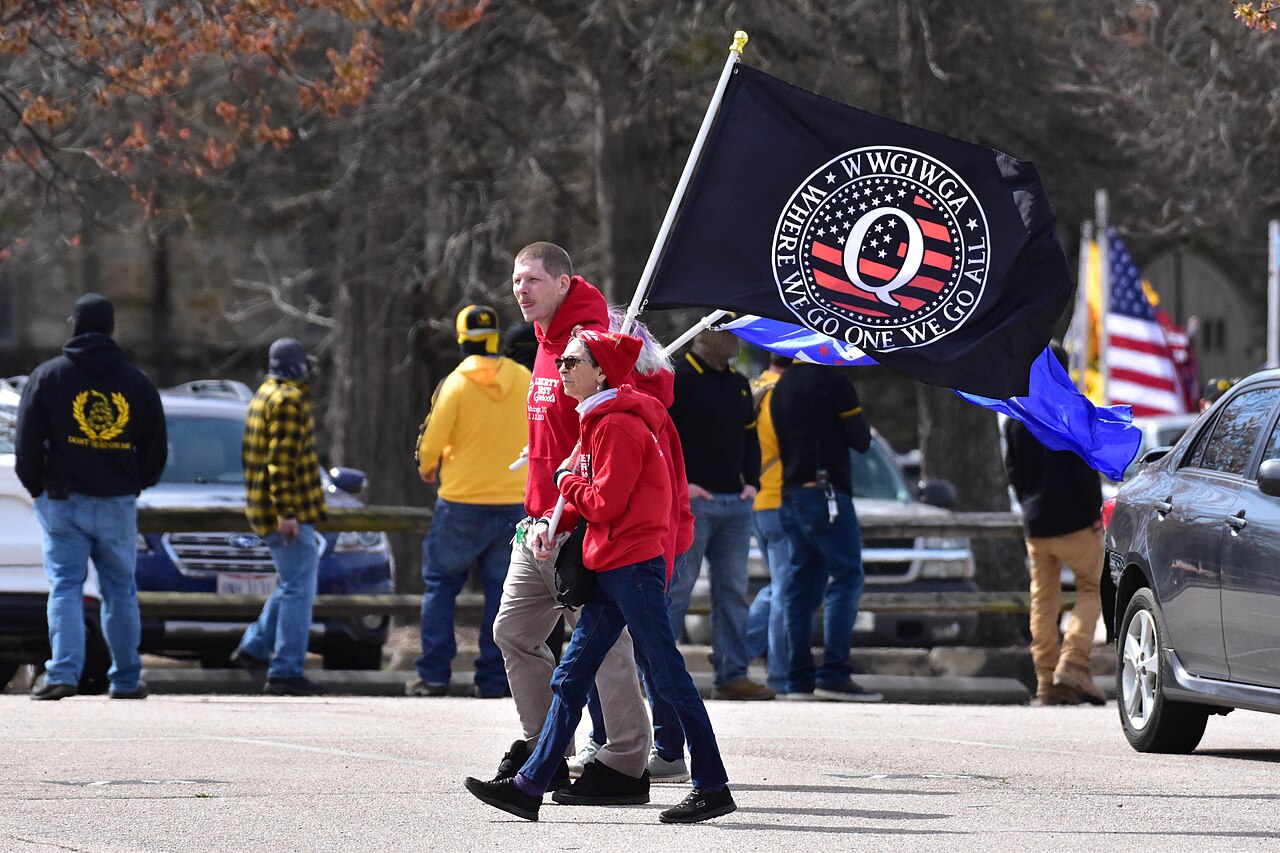
QAnon's claim to authority began with anonymity, not a publicly authenticated intelligence briefing. A July 2020 study by Amarnath Amarasingam and Marc-Andre Argentino traced its emergence to an October 28, 2017 post on 4chan. The author used the name Q, invoking a US Department of Energy security-clearance designation. Borrowing that designation did not establish that the poster possessed the clearance or access being implied.
The researchers placed Q within an existing message-board pattern of anonymous users presenting themselves as government insiders. Their study combined monitoring of community messages and social-media material with public reporting. It described a movement without a clear organisational hierarchy, in which followers helped interpret and expand the narrative rather than merely receive a fixed statement.
That participatory structure matters. An ambiguous message can generate many competing explanations, each supplied by readers. The resulting volume of discussion may look like corroboration even when the interpretations lead back to the same unverified assertion. This is an analytical distinction between the spread of a belief and independent evidence for its content, not an identification of whoever operated the account.
On October 2, 2020, the US House of Representatives adopted a resolution condemning QAnon. The text characterised its allegations as unfounded and warned about threats, harassment and violence associated with conspiracy-driven extremism. It also said false reports linked to the movement were interfering with legitimate work against child exploitation and trafficking.
The resolution encouraged federal agencies to prevent criminal activity and investigate possible foreign amplification. That request was not a finding that a particular foreign sponsor had been proved. Nor did the resolution's references to arrests turn allegations in those cases into convictions. Its significance here is the documented public response to the movement and the harms lawmakers said required attention.
The two records show different stages of the same history: an anonymous claim of privileged knowledge and a later institutional response to its circulation. Neither establishes QAnon as an authentic intelligence channel. Concern about child abuse is real and legitimate; attaching it to an unverified hidden-cabal narrative does not strengthen an investigation. It can instead redirect attention from identifiable victims, specific reports and evidence that investigators can actually examine.