The Protocols of the Elders of Zion is an antisemitic fabrication, not an authentic meeting record. Its false authority can be traced through borrowed writing: comparison with earlier publications exposes how the text was assembled, rather than merely disputing whether its accusations sound plausible.
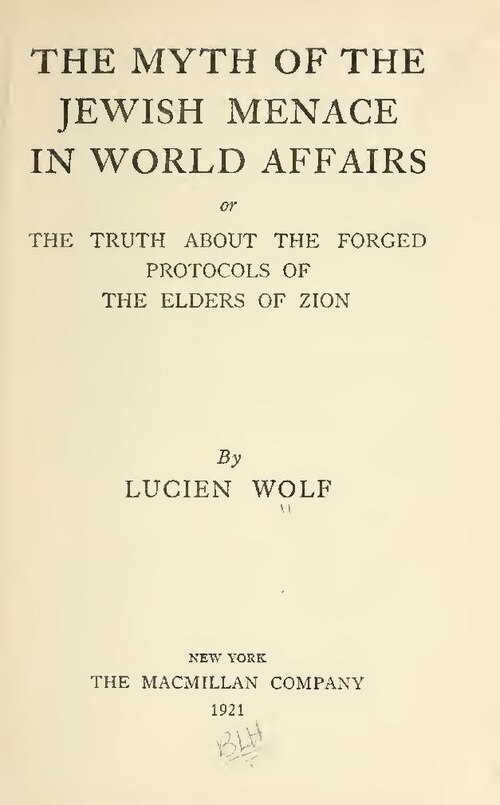
The United States Holocaust Memorial Museum dates its first publication to a Russian newspaper in 1903. In 1921, journalist Philip Graves set passages beside Maurice Joly's 1864 political satire, Dialogue in Hell Between Machiavelli and Montesquieu. Joly's work did not discuss Jews. Substantial borrowing from that earlier satire undermined the later text's presentation as a record of actual secret deliberations.
The museum also identifies material connected to Hermann Goedsche's 1868 novel Biarritz. Fiction and satire were repurposed as accusations against a real population. These borrowings expose fabrication, not the existence of the alleged conspirators.
Exposure did not end distribution. The museum's chronology records that the Nazi Party acquired copyright to a German edition in 1929 and that its publishing house had produced 22 printings by 1938. These dates matter because they follow the public demonstration of plagiarism. Continued publication is a record of propaganda being promoted after discrediting, not a succession of independent discoveries confirming the story.
The same chronology records a US Senate Judiciary subcommittee's rejection of the text in 1964 and an Indian edition in 1974 under the title International Conspiracy Against Indians. Changing the audience and title allowed the material to be attached to different political grievances. An edition's local framing does not repair the false provenance of its underlying text.
This history distinguishes the persistence of a claim from the strength of its evidence. The Protocols can be studied as a source for antisemitic propaganda and its transmission, but not as a factual account of Jewish conduct. Calling it merely controversial would obscure the demonstrated forgery; reproducing its accusations without that context would continue the mechanism by which fabricated authority was used to direct hostility at Jews.