The hidden-Nazi-base story gains apparent plausibility by combining expeditions that really happened. But their existence does not establish the relationship the story proposes: a German refuge later attacked by Allied forces.
Colin Summerhayes and Peter Beeching's 2007 Polar Record study distinguished Germany's 1938-39 expedition from claims of a wartime base in Dronning Maud Land. They rejected the base allegation and the supposed Antarctic journeys of two submarines that surrendered in Argentina.
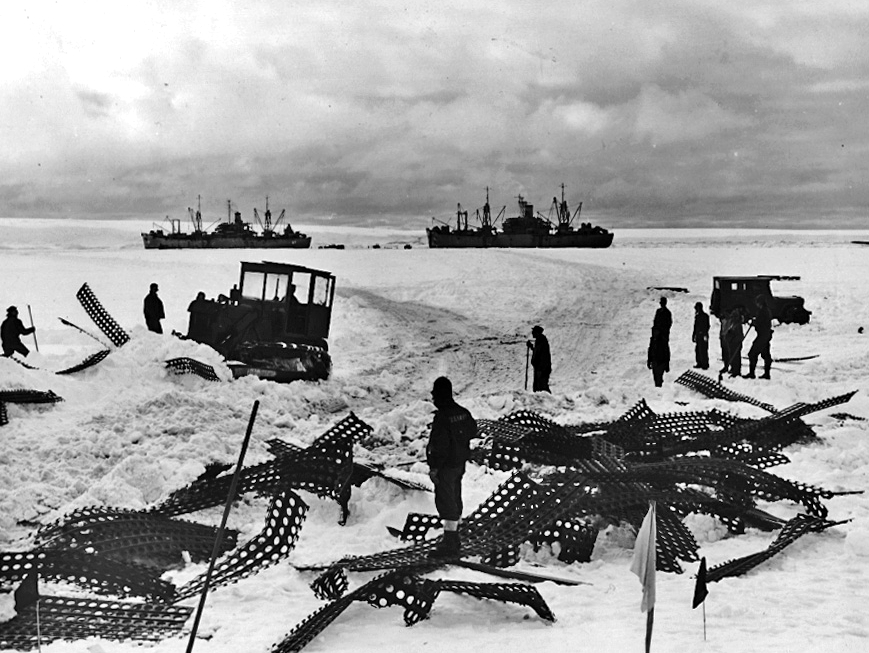
They also examined the US Navy's 1946-47 Operation Highjump, interpreting it as preparation for polar military operations, not an attack on Germans. Journalists accompanied the expedition. Calling it simply a secret battle suppresses that context.
Britain's Operation Tabarin supplies a separate example of genuine wartime secrecy. The British Antarctic Survey records that the expedition left Britain in December 1943 under James Marr. In February 1944 its team established bases at Deception Island and Port Lockroy, beginning a permanent British scientific presence.
Those named bases and dates matter. Evidence for a British expedition near the Antarctic Peninsula is not evidence for a German fortress elsewhere on the continent. Moving from one to the other requires a documented connection, not the shared words 'secret', 'war' and 'Antarctica'.
The expeditions' chronology and documented purposes do not support the fortress narrative. It instead shows how distinct national projects can be combined into a single misleading plot. Genuine secrecy deserves historical examination, but it cannot supply missing transport, construction or operational evidence for an entirely different alleged installation.