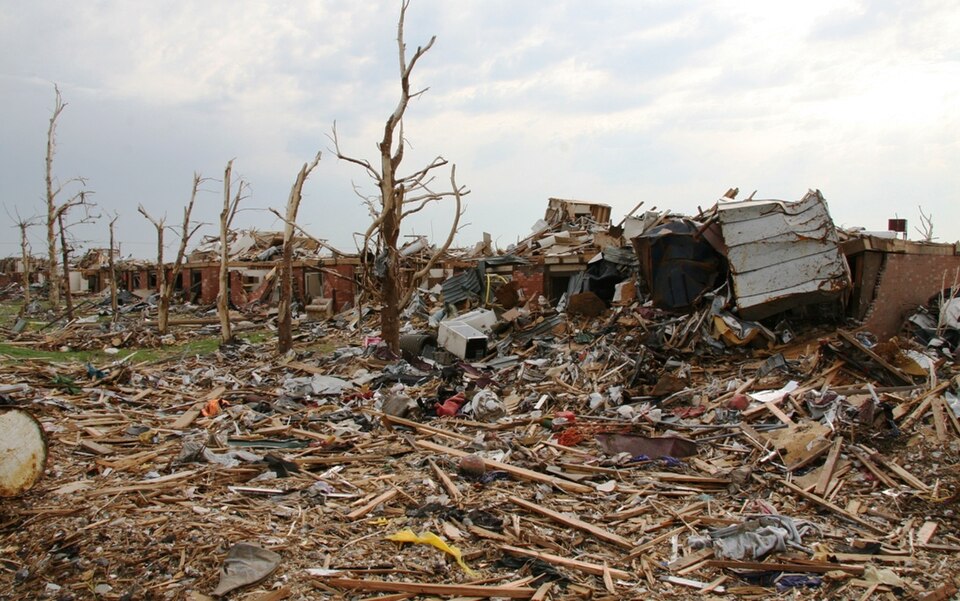
The destruction in Joplin, Missouri, on May 22, 2011 does not establish that a military weapon produced the tornado. The accessible investigations document a violent storm and the difficulties of protecting a city in its path. Their evidence supports analysis of weather observations, warnings and buildings; it supplies no basis for attributing the event to a weapon.
The National Weather Service's July 2011 service assessment rated the tornado EF5 and estimated maximum winds above 200 miles per hour. It included radar observations and a warning timeline. Its authors noted that low-level rotation intensified rapidly as the storm approached Joplin, while the available radar scanning strategy limited how often forecasters could sample the lowest elevations.
Advance notice did not guarantee immediate protective action. Drawing on nearly 100 interviews, the assessment found that many people sought additional confirmation after the first indication of danger. Familiarity with sirens and previous experience influenced their response. This is a specific communication problem, not evidence that officials knew of a secretly manufactured storm.
NIST's final technical investigation, released in March 2014, examined storm characteristics alongside building performance, human behaviour and emergency communication. Its 16 recommendations included more resilient construction, protection for essential facilities, sheltering strategies and clearer warning practices. The inquiry thus addressed several layers of risk rather than treating a tornado's intensity as the sole explanation for deaths and destruction.
Those different layers matter when assessing the weapon allegation. A warning can be issued yet fail to prompt action; a person can act yet lack a sufficiently protective shelter. An extraordinarily damaging event does not require an extraordinary hidden actor when the studies identify such vulnerabilities. This is an interpretation of the investigations, not a claim that either inquiry performed a dedicated test of every imagined weapon.
The historical lessons are practical: clearer risk messages, faster observation of rapidly changing storms and stronger places to shelter can each address a documented failure point. Replacing those findings with an unsupported military narrative obscures the changes the investigators actually recommended.