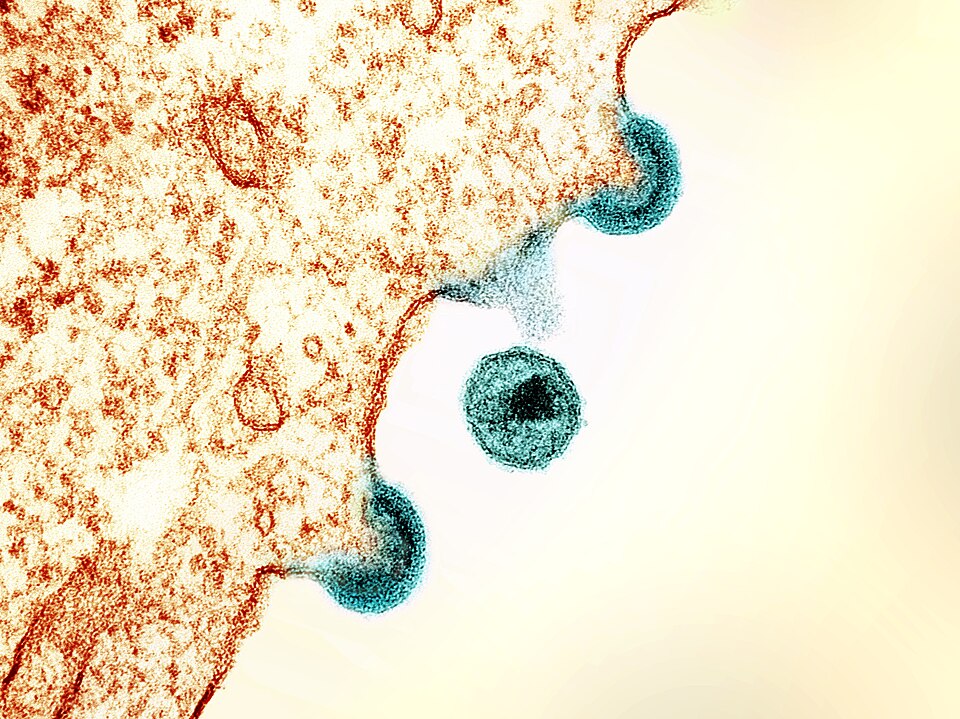
Claims that HIV was manufactured to target Black or gay communities run into a concrete chronological problem: researchers have recovered genetically distinct HIV-1 sequences from samples collected in central Africa long before the recognised AIDS pandemic. The evidence concerns preserved biological material, not retrospective guesses based on which communities later suffered most.
A 2008 Nature study examined a lymph-node biopsy collected from a woman in Leopoldville, now Kinshasa, in 1960. Researchers compared its viral sequences with a previously known 1959 sample. The difference between the two showed that HIV-1 had already undergone substantial diversification. Their evolutionary analysis placed the common ancestor of pandemic group M near the beginning of the twentieth century.
A separate 2014 study led by Nuno Faria used central African viral sequence data to reconstruct early spread. Its published abstract identifies Kinshasa in the 1920s as a centre of transmission and a source of viruses that reached other locations before 1960. The authors connect the epidemic's expansion with social change and transport networks, rather than with the later date at which AIDS became widely recognised.
These are different kinds of dates. A specimen's collection date provides a historical anchor; an estimated common-ancestor date is an inference from genetic relationships. Neither identifies the first infected person or reconstructs every transmission. The distinction prevents an approximate evolutionary date from being presented as an exact moment of origin.
The NIH also distinguishes HIV, the virus, from AIDS, the most advanced stage of infection. Recognition of a syndrome is therefore not a timestamp for the creation of its cause. The studies reviewed here do not support the targeted-weapon allegation. Disproportionate suffering in particular communities cannot, by itself, overturn a biological history anchored in earlier specimens.