Population change and a plan to replace a population are different propositions. The great-replacement narrative collapses them: it treats changing demographic shares as evidence that an enemy deliberately organised the change. A population table cannot establish that intention, and it cannot make an ethnic or religious community collectively responsible for it.
The Institute for Strategic Dialogue's 2019 report traces the term to Renaud Camus's 2011 book Le Grand Remplacement. It examines its use within European Identitarian networks and the way a claim about culture and migration became a transnational political message. This is a history of the narrative's circulation, not demographic confirmation of its premise.
The report describes how proponents select population projections to suggest an existential threat and portray minority communities as incompatible with the majority. Its analysis places the narrative alongside other racist conspiracy traditions. The consequential step is not simply noticing that migration occurs: it is transforming people into a coordinated threat and presenting an inferred hostile purpose as an established fact.
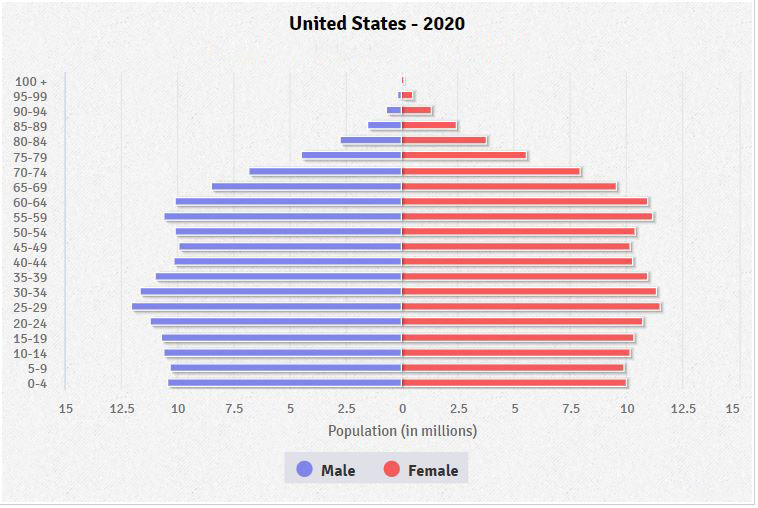
The US Census Bureau's 2023 projections illustrate what demographic modelling actually does. They offer a main series and alternative high-, low- and zero-immigration scenarios, based on assumptions about births, deaths and net international migration. These are conditional estimates. Differences between their results reflect different inputs, not competing revelations about a concealed policy.
Ageing and reduced fertility matter as well. The bureau projects deaths exceeding births eventually in every scenario, although the timing differs. It also projects changes in the population's age structure. A single chart of racial or ethnic shares therefore leaves out important processes; treating immigration as the only driver misrepresents the model's construction.
The bureau identifies these as the first projections based on the 2020 Census, superseding its 2017 series. Revision is part of the exercise: updated starting information and assumptions can change a forecast. None of those US scenarios should be transplanted into another country as though its institutions and demographic history were identical.
Migration policy can be debated through its stated rules, outcomes and trade-offs. The unsupported leap is to turn a conditional statistical future into proof of coordinated ethnic destruction. Understanding the slogan's political history alongside the model's assumptions keeps demographic explanation separate from collective blame.