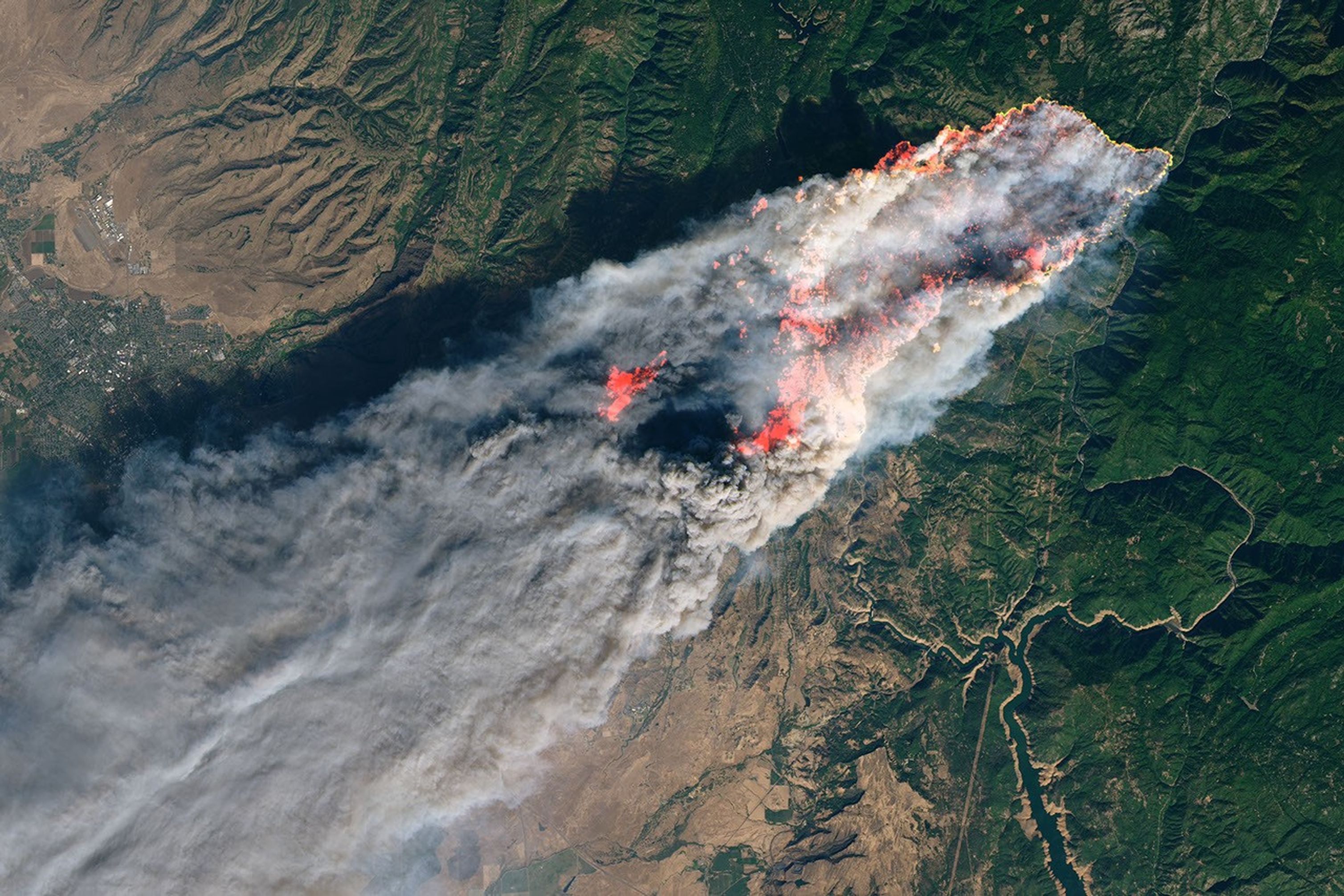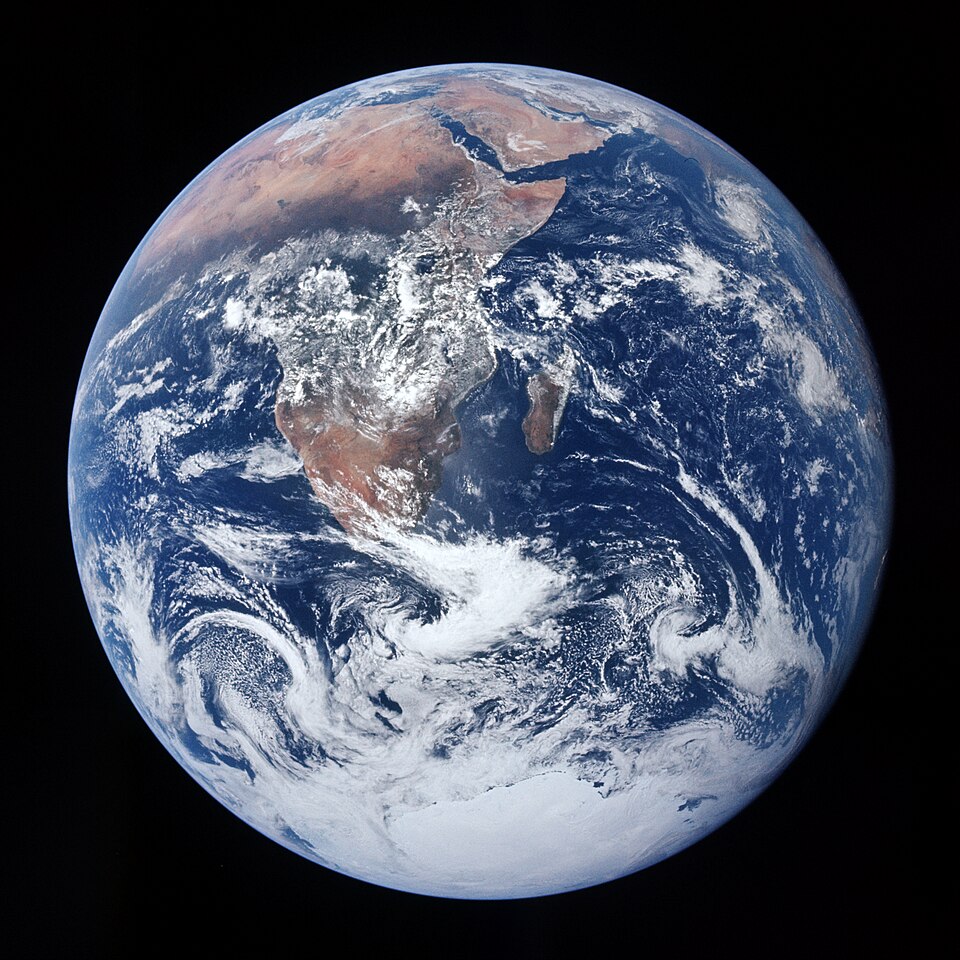
Earth is not a perfect sphere, but that does not make it flat. NOAA describes it as an irregular ellipsoid, with a bulge around the equator and a changing surface. The word irregular refers to measurable departures from a simplified round model, not to evidence of an entirely different planetary geometry.
Geodesists use more than one representation because one surface cannot conveniently answer every question. A smooth ellipsoid provides a mathematical reference without individual mountains and valleys. The geoid instead approximates global mean sea level and reflects variations in gravity. The physical terrain is different again. Confusing these three surfaces can make legitimate technical distinctions look like contradictions.
The geoid's unevenness follows from Earth's uneven distribution of mass, according to NOAA's positioning tutorial. A level reference influenced by gravity need not match the simple geometry used for other calculations. That is why a diagram of a geoid should not be treated as a literal photograph of the planet's visible surface.
Image construction is another separate issue. NOAA identifies the global image on its Earth-shape page as a combination of land observations collected over sixteen days and a cloud snapshot from another satellite. The agency discloses that assembly. It is not presented as a single instant captured by one camera, and its composite nature does not by itself invalidate the underlying measurements.
NASA's account supplies another part of the physical picture: Earth's rotating, tilted axis produces opposite seasons in the two hemispheres as the planet orbits the Sun. Seasonal change is not explained simply by assuming that every part of Earth is closer to the Sun in summer. The hemispheres' differing orientation matters.
A flat-world claim would need to account consistently for the measurements those models describe, rather than treating the existence of models or assembled imagery as evidence of fabrication. The sources reviewed support a nearly spherical planet with measurable irregularities. They do not support replacing that account with a flat surface.