The claim that COVID-19 was fabricated confuses two questions: whether a virus was identified in patients, and whether governments counted every infection accurately. Laboratory findings address the first. Surveillance definitions and reporting practices constrain the second.
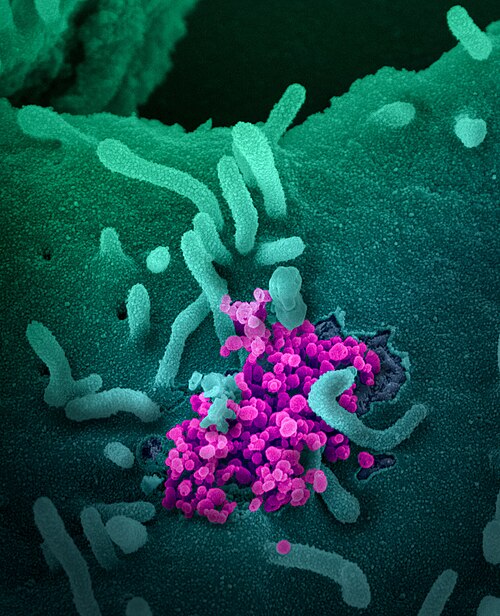
A study by Peng Zhou and colleagues, published in Nature in February 2020, reported full-length viral genomes from five patients. Researchers also isolated virus from a critically ill patient's respiratory sample in cultured cells. Their methods included sequencing, microscopy and measurements of viral material during culture, rather than relying only on a diagnosis written on a hospital form.
The team reported that serum from infected patients neutralised the isolated virus in laboratory tests. Its experiments also examined use of the ACE2 receptor. These are different observations of a biological agent; a disputed national case total is not a substitute explanation for them.
WHO's case dashboard explicitly describes limitations in the numbers countries report. Testing access, reporting frequency and surveillance arrangements differ and have changed. Retrospective corrections can alter earlier totals. A reported case series is not a complete census of infections or a uniform measure across every country and period.
It would therefore be misleading to treat a dashboard number as perfectly precise, but equally misleading to infer that revisions make the underlying virus imaginary. Uncertainty about an outbreak's size is not the same as absence of laboratory evidence for its cause.
The early paper does not settle every question about pandemic origins, individual death attribution or public policy. Those require their own evidence. Its narrower significance is substantial: the fabricated-disease allegation does not account for the linked patient, genetic and experimental findings described in the study.