Five Navy aircraft disappearing on one training mission is a tragedy substantial enough without adding a supernatural explanation. Flight 19, lost on December 5, 1945, became central to the Bermuda Triangle legend. The historical question is what the surviving communications and search record reveal, not whether an unexplained ending automatically proves an unknown force.
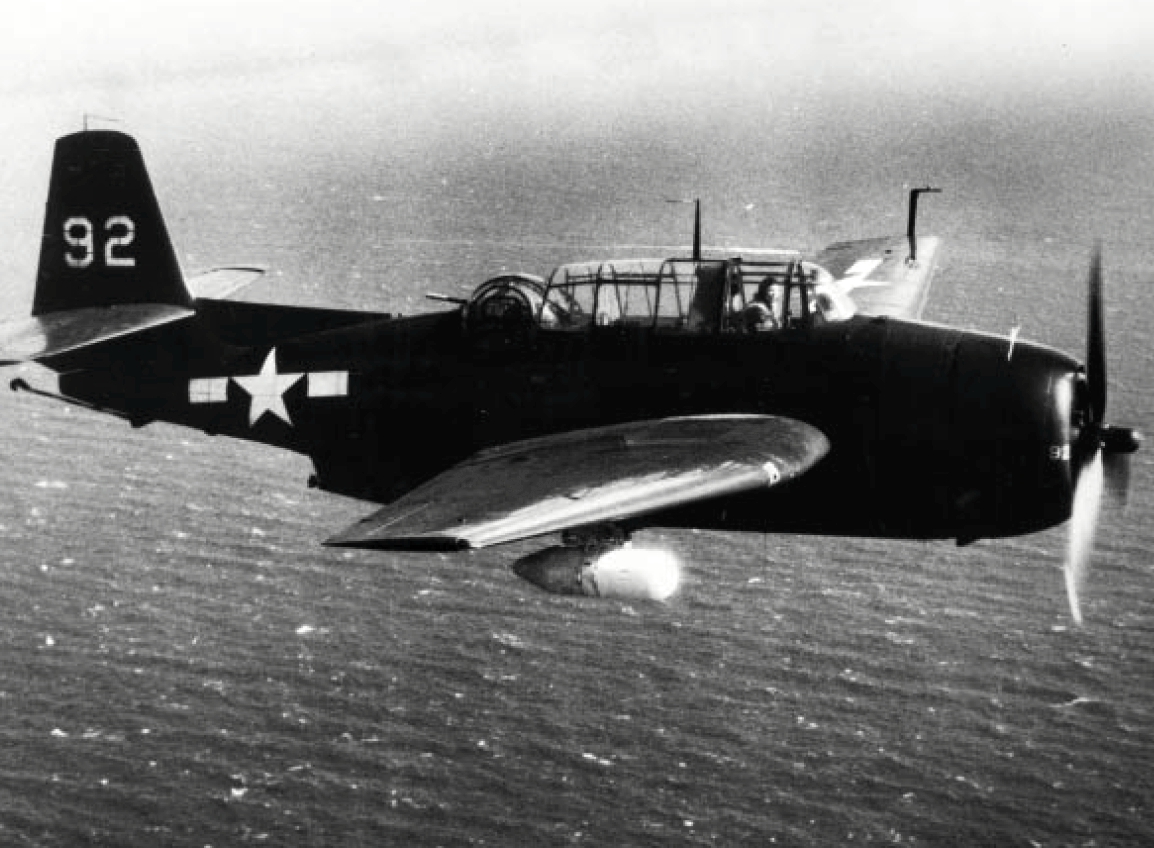
Naval History and Heritage Command's account describes five TBM Avengers leaving Fort Lauderdale for navigation and bombing practice over the Bahamas. Radio exchanges indicated uncertainty about position and problems involving the flight leader's compasses. The account considers disorientation, fuel exhaustion and deteriorating weather the likely sequence, while explicitly stating that the exact cause was not determined.
A search aircraft was also lost, but the evidence for that loss was different. A PBM Mariner carried thirteen men; the Navy history describes observations consistent with fire and an aircraft falling into the sea. Its probable in-flight fire should not be merged with the Avengers' disappearance into a single mysterious mechanism. Two losses connected by a rescue effort need not share a cause.
NOAA's wider explanation identifies hazards including tropical storms, shallow waters and difficult navigation. It also notes that the Bermuda Triangle lacks official boundaries and is not an officially recognised geographic name. A collection of dramatic incidents inside a loosely drawn shape is therefore not, by itself, a measurement of elevated risk.
NOAA states that evidence does not show disappearances occurring more frequently there than in other heavily travelled ocean areas. Counting losses without specifying traffic, area and period would not establish a meaningful rate; it would favour whichever selection produced the most striking story.
The result is not a claim that every missing aircraft has been found or every final moment reconstructed. Flight 19 remains incompletely explained in the Navy's historical account. But its recorded navigation difficulties are evidence, whereas a portal or alien intervention is an added allegation. Preserving uncertainty about a particular tragedy is compatible with rejecting the unsupported leap to a uniquely supernatural region of the Atlantic.