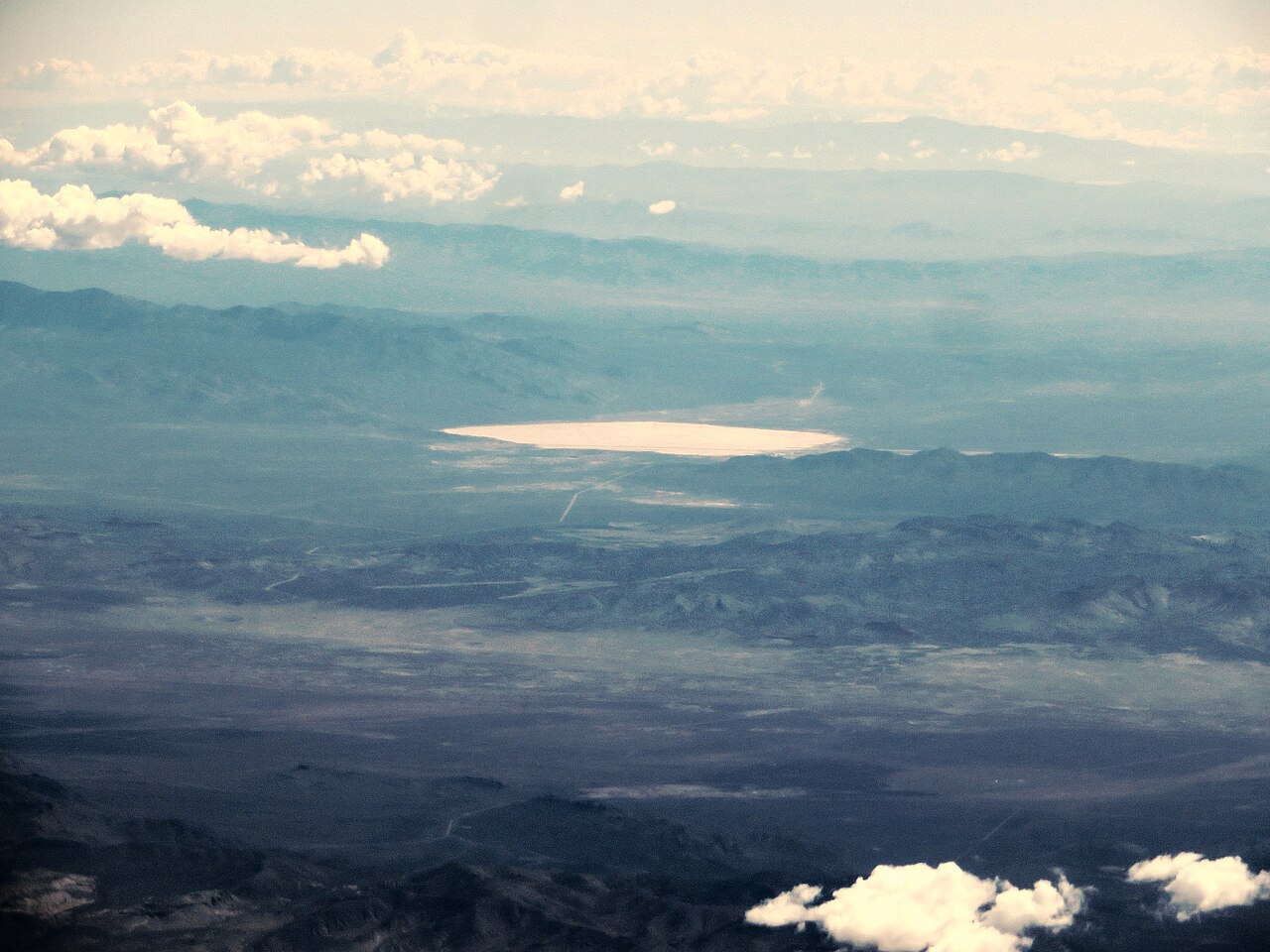
Area 51's association with hidden aircraft begins with an actual reconnaissance programme, not an alien discovery. CIA's historical account describes Groom Lake in Nevada as a place where experimental aircraft could be tested away from public observation. The important question is how that genuine secrecy became evidence, in popular retellings, for a different and unsupported story.
The agency's 2022 account identifies the U-2 and A-12 OXCART programmes and a partnership involving CIA, the Air Force and Lockheed. Workers and supplies travelled by air between the remote site and California. Even the reassuring name Paradise Ranch had a practical purpose: making an isolated desert assignment more attractive to recruits.
A separate CIA history of UFO investigations explains the observational problem. In the mid-1950s, the U-2 operated far above the altitudes familiar to commercial aviation. Sunlight reflecting from early silver aircraft, particularly near sunrise or sunset, could produce an appearance that observers below struggled to identify. An unfamiliar sight did not require an unfamiliar civilisation to produce it.
That history also acknowledges an institutional problem. Investigators could compare sightings with secret flight information, but revealing the aircraft would compromise the programme. According to the account, public explanations sometimes invoked natural phenomena instead of disclosing reconnaissance flights. This was concealment of a real activity, and it gave subsequent suspicion an understandable historical foundation.
The distinction is between the object concealed and the explanation later attached to concealment. A misleading account can demonstrate a failure of public candour without demonstrating that officials possessed an extraterrestrial vehicle. Here, the documents identify aircraft development and intelligence collection as the protected activities; they do not supply a chain of custody for alien bodies or hardware.
CIA's retrospective history is also an account by an institution involved, not independent verification of every sighting. Its explanatory value lies in a specific mechanism: unusual flight characteristics combined with restricted information and public misdirection. Area 51's secrecy is therefore part of the history, not something that has to be denied. The unsupported step is treating that secrecy as sufficient proof of the alien narrative.