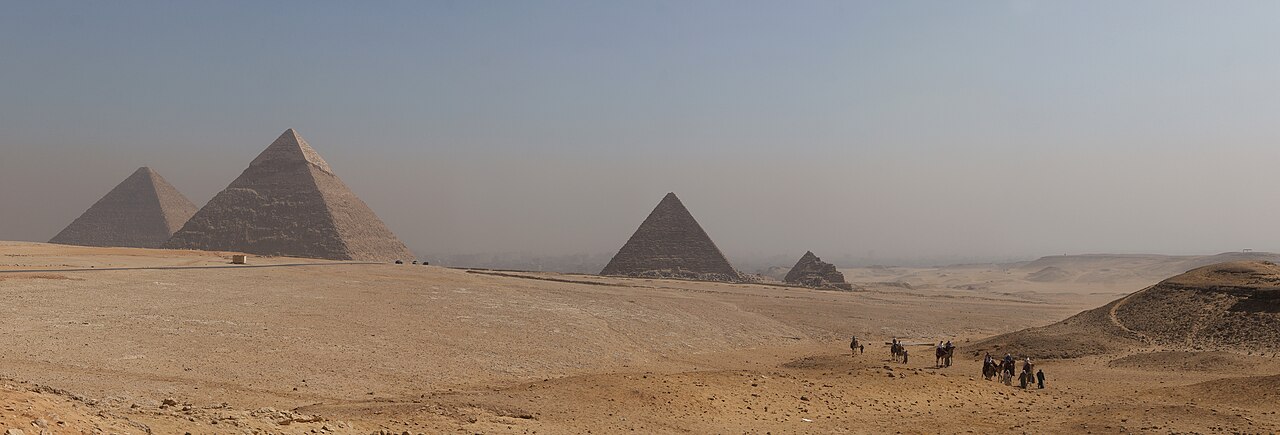
The pyramids at Giza are not isolated objects without a human setting. South of the Sphinx, excavators have uncovered the remains of a settlement associated with the royal building projects. That surrounding evidence changes the ancient-alien question: explaining a monument involves accounting for the people, supplies and administration beside it, not simply expressing astonishment at its size.
Ancient Egypt Research Associates says its excavation began in December 1988 at Heit el-Ghurab. The Fourth Dynasty settlement extended over more than seven hectares. Its account connects the site with the pyramid complexes of Menkaure and Khafre, and probably Khufu. That qualification matters: association with one king should not automatically be extended to every stage of construction.
The site contains workshops, food-production areas, storage facilities and different kinds of residences. AERA describes materials arriving from across Egypt and grain held in royal silos. These are the less spectacular requirements of monumental building. Feeding and equipping a workforce was itself a substantial operation; the settlement provides a physical context for it.
A preliminary report from the 2015 season shows how that context is reconstructed. At Area AA-South, researchers initially considered two burnt circular mudbrick features possible supports for brewing vats. Further excavation instead identified bread ovens and kitchen or bakery rooms within a large building. The report describes a hearth incorporating an inverted bread mould and a floor cavity interpreted as the position of a mixing vat.
The same investigation identified an audience hall with architectural features supporting an interpretation of the building as an official's residence and workplace. This remains an archaeological interpretation, not a recovered label naming its occupant. The change from a brewing hypothesis to a baking explanation is especially revealing: conclusions followed the excavated arrangement rather than the initial expectation.
None of this supplies a complete reconstruction of how every pyramid stone was raised. It does, however, make an extraterrestrial explanation unnecessary for the documented settlement, provisioning and administration. An unresolved lifting detail does not erase the bakeries or turn a human workplace into evidence of alien machinery. Giza's scale is extraordinary; its excavated surroundings make the people who sustained that achievement harder, not easier, to overlook.