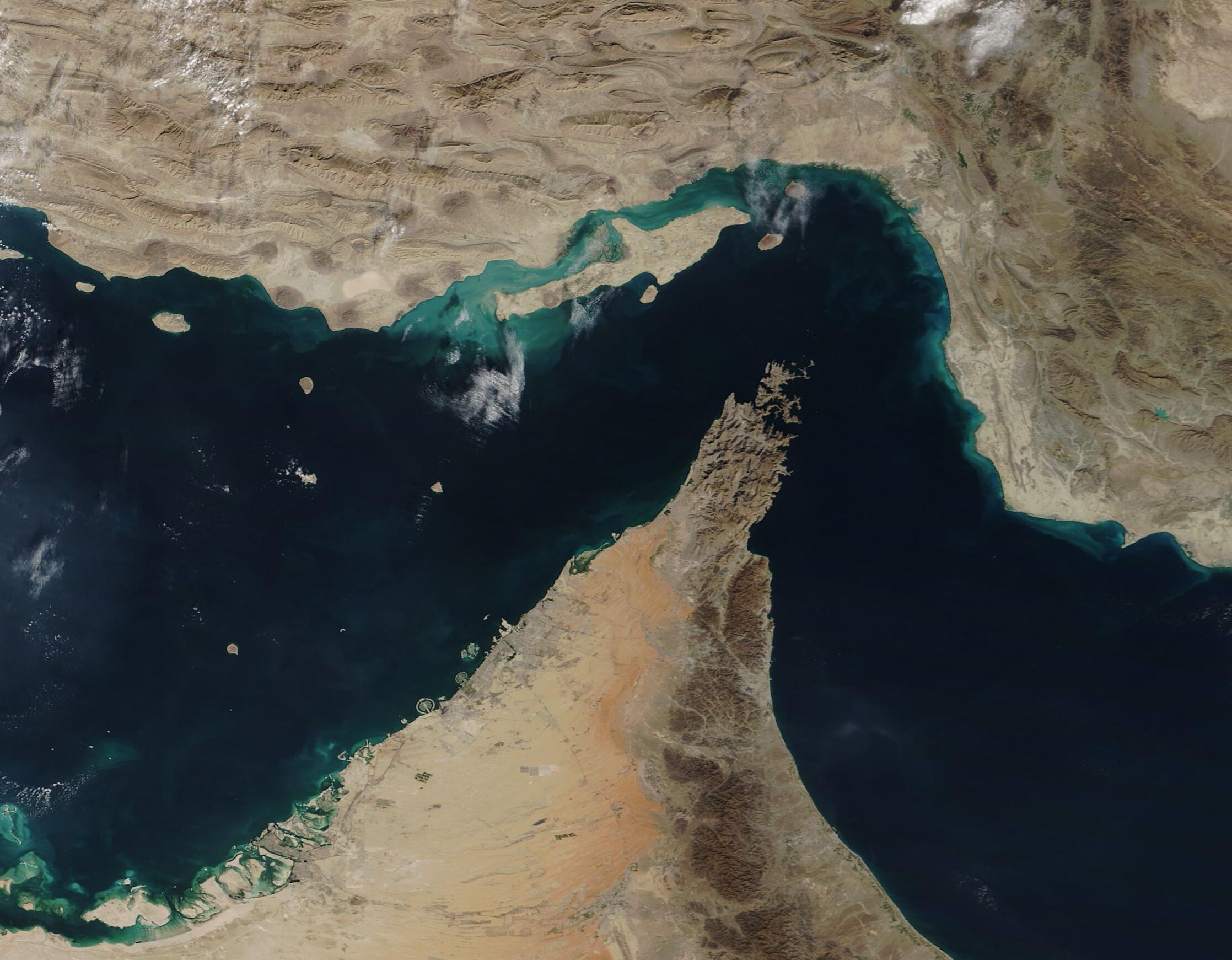
US Central Command said its forces struck five Iranian crude-oil carriers on September 8, 2026 after two attempted ballistic-missile attacks on an American warship over the preceding two days. The command said the warship evaded the attacks and no American personnel were harmed. Its account described the tankers as rendered inoperable.
The command identified Kaviz, Charminar, Horizon 1 and Riesco in the Gulf of Oman, and Derya near Kharg Island. It said crews were instructed to leave before the strikes. CENTCOM linked the vessels to an oil-shipping network financing the Islamic Revolutionary Guard Corps and regional proxies; that description is the US military's attribution.
Vessel-specific reporting gives a more precise picture than treating all five ships as sunk. The Maritime Executive reported that imagery released by CENTCOM suggested disabling hits at the stern of several tankers, while Riesco received a more forceful strike and subsequently sank. The publication also reproduced a September 9 CENTCOM post stating that Riesco had sunk the previous day. The reported sinking therefore concerns that named vessel, not the entire group.
The strikes followed an earlier round on September 5. In its statement that day, CENTCOM said attacks on an aircraft carrier and destroyer had prompted strikes on Downy, Stark 1 and the unladen tanker Kylo, also known as Noxen. It described the first two as permanently disabled and the third as inoperable, after crews were directed to abandon them.
The sequence shows how the confrontation extended beyond attempts to hit naval combatants into attacks on oil-transport capacity. CENTCOM's September 5 explanation explicitly framed the tanker strikes as imposing higher economic costs on Iran. Separately, The Maritime Executive reported an IRGC warning to tanker crews off Kuwait and Bahrain to leave their vessels. That warning brought additional commercial shipping into the threatened target set.