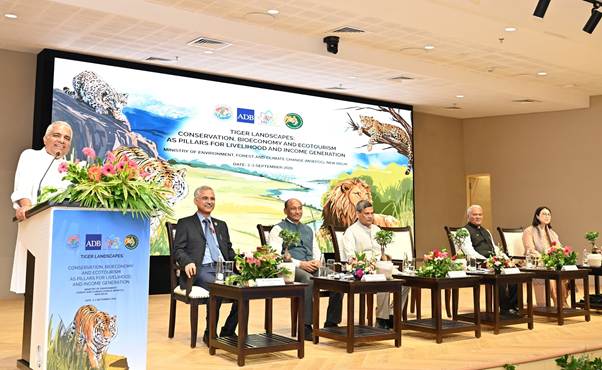
The International Big Cat Alliance and Asian Development Bank signed a cooperation agreement in New Delhi on September 2, 2026, linking landscape conservation with development finance and knowledge exchange. The two-day workshop, organised with the National Tiger Conservation Authority, examined how tourism and other economic activity could support communities living alongside tiger habitats.
Environment Minister Bhupender Yadav described conservation as a question of connected forests, grasslands, rivers, prey and wildlife corridors. That framing extends the management task beyond protecting an individual species: the same landscape also supplies water, stores carbon and supports livelihoods. He asked participants to incorporate communities' traditional knowledge into conservation policymaking.
ADB's India country director, Mio Oka, supplied a specific project lead in her own account of the signing. She said the bank was preparing a biodiversity project in Rajasthan, bringing finance and project preparation together with responsible tourism, community enterprises and landscape restoration. She also described adapting India's conservation experience for other parts of Asia and the Pacific.
The workshop's second-day financing panel addressed the duration of investment. According to IBCA's account, contributors from ADB, CII, UNDP and Malaysia examined nature bonds, blended finance and private investment. They discussed moving beyond short-term corporate social responsibility funding towards capital that can remain committed through decades of conservation and restoration.
That changes the financing question from how much money can be raised at launch to how reliably work can be supported over time. The panel linked predictable funding with stronger local markets and community benefit-sharing. Its discussion also covered biodiversity credits, conservation funds and measures to reduce investment risk, alongside transparent data and measurable targets.
Read together, Oka's proposed Rajasthan activities and the panel's financing priorities put two practical tasks alongside habitat restoration: developing local enterprises and designing durable funding. Community income is part of that proposed project design, rather than a benefit assumed to follow automatically from protecting habitat.