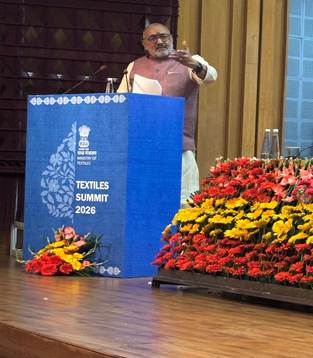
India's Textiles Summit, held on June 23-24, 2026, linked export expansion to a practical question for manufacturing clusters: which products can meet the requirements of a particular market? The Textiles Ministry's account said participants discussed buyer standards, traceability and recycling alongside trade agreements and a national export roadmap.
Commerce Secretary Rajesh Agrawal identified gaps in district-level information as an obstacle to using trade agreements. The discussions also connected global brand requirements with state-level cluster strategies. Those two strands require different information: the commercial terms for entering a market, and the composition and documentation of the actual goods being offered.
The European Union's textile-labelling guidance provides a specific example of the latter. It says covered products sold to consumers must identify their fibre composition, with fibres listed in descending percentage order. Composition information must be clearly separated from other material such as care instructions, and translated for the countries where consumers will buy the product.
The guidance also distinguishes consumer and business-to-business transactions: commercial documents may replace or supplement labels in business sales. Checks can occur at customs, warehouses or retail outlets. An exporter therefore needs consistent composition information throughout the chain, rather than treating the sewn-in label as an isolated final production step.
The European Commission's detailed questions and answers clarify a less obvious calculation issue. A component with a different fibre content, below 30% of total product weight and not the main lining, may not require separate labelling. Its fibres still count when calculating the whole product's composition. Exemption from a separate label is not exemption from that calculation.
For a cluster preparing products for this market, that distinction makes accurate material records useful before labels are designed. It connects sourcing decisions with the percentages eventually declared to a buyer. The summit's proposed district support could address precisely this kind of product-specific information need, rather than limiting export assistance to general awareness of tariff preferences.