Students and teachers from Tamil Nadu and Puducherry attended the Election Commission's third regional ELC 2.0 conference in Chennai on August 27, 2026. The proposed year-round programme gives educational institutions a continuing role in electoral learning. Its classroom significance lies in how that work can be organised across different ages, rather than treating every student as a first-time voter with the same immediate needs.
The institutional groundwork predates this conference. In a December 2023 parliamentary reply, the Education Ministry described its November agreement with the Commission: electoral literacy would enter the curriculum for Classes 6 to 12, with corresponding provision in higher and adult education. Teacher-education materials were also to include the subject. This places responsibility on teaching systems as well as clubs; regular lessons can establish concepts that students later test through practical activities.
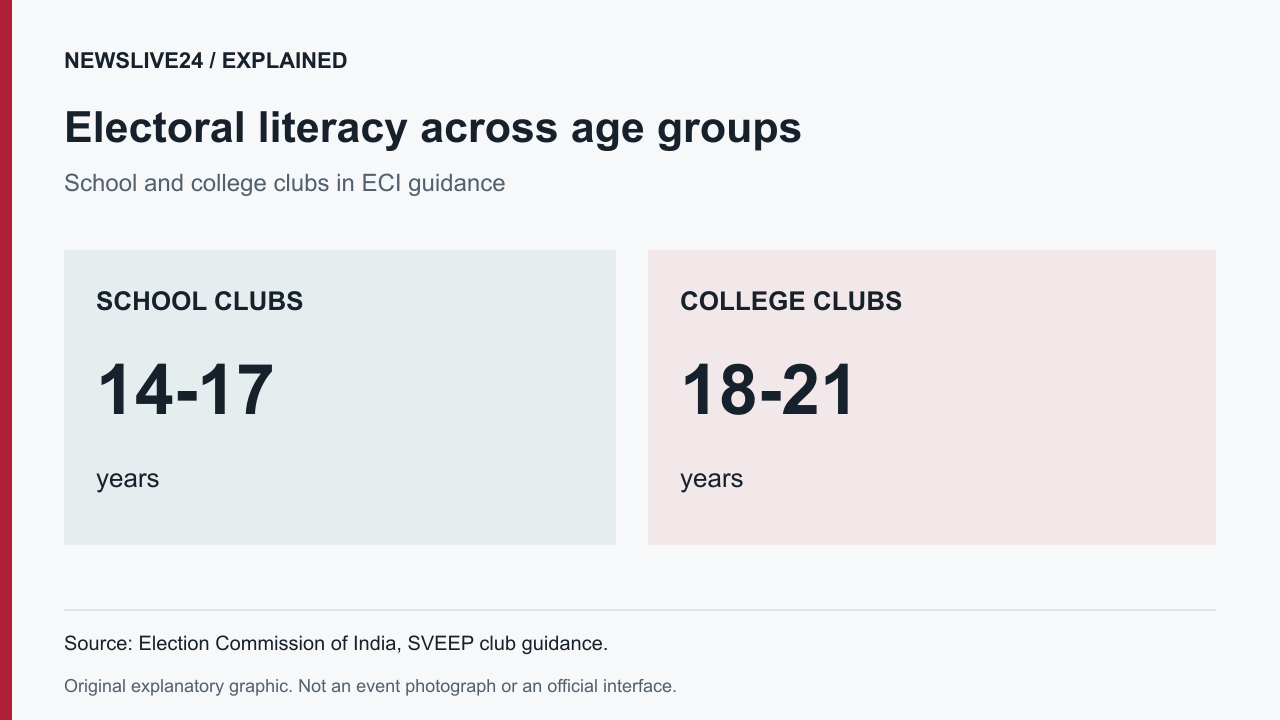
ECI's established club guidance distinguishes school participants aged 14 to 17 from college participants aged 18 to 21. It describes classroom activities and games supported by step-by-step resource guides for conveners. The distinction matters for lesson design: younger students can explore electoral choices before their own participation, while older learners may connect the same concepts with immediate questions about registration and voting. A shared conference therefore serves audiences at different stages of civic preparation.
The ministry's framework names mock polls, voting-machine demonstrations and ethical practices in student-union elections as learning opportunities. These offer different forms of practice: rehearsing a procedure, understanding equipment and considering conduct in campus elections. Paired with club guides, they give teachers concrete options beyond appeals to vote. Connecting these exercises to classroom concepts would make participation an opportunity to develop judgement, rather than familiarity with election terminology alone.