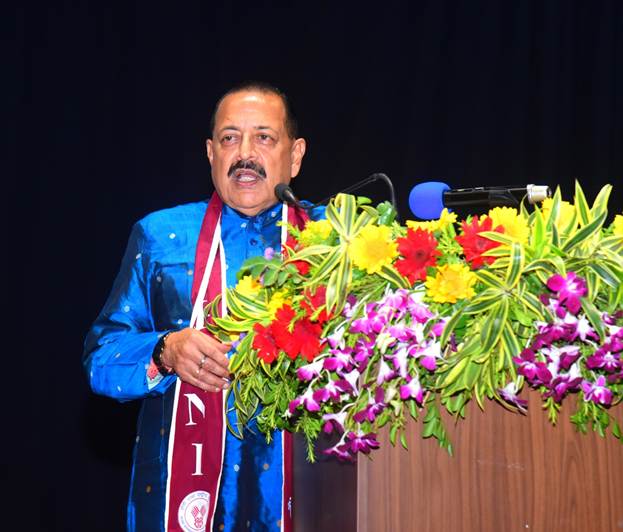
NISER Bhubaneswar conferred degrees on 260 students at its fifteenth graduation ceremony on July 9, 2026, according to the Department of Atomic Energy. The event brought together graduates from integrated master's, integrated master's-doctoral, master's and doctoral programmes. That mix reflects several stages of scientific training rather than a single route into research.
Jitendra Singh used the ceremony to connect the institute's work with Homi Bhabha's scientific legacy and national development priorities. Those remarks describe the government's expectations of the graduates. The more concrete educational question is how an institution moves students from learning established science towards designing and defending research of their own.
NISER's School of Chemical Sciences provides one example in its published integrated MSc-PhD programme document, drawn up for a programme expected to start in 2022. It describes a three-year master's stage combining two years of classroom teaching with a year of project work. About one-third of the course credits come from the master's project.
The project is assessed during each semester and culminates in an open thesis defence. Continuing towards a doctorate also requires a General Comprehensive Examination. This sequence places different demands on the student: sustained work on a research problem, public defence of the resulting thesis and a separate test of the coursework foundation.
That structure explains why a graduation total combines different kinds of achievement. A master's research project tests whether a student can develop and defend a bounded investigation; doctoral registration begins a further research stage under additional requirements. The chemistry document illustrates one pathway within NISER, rather than specifying which of July's 260 graduates followed it.
For the ceremony's wider scientific ambitions, the institutional connection is the combination of taught knowledge, laboratory work and assessed research. The minister's call to contribute to national priorities sits alongside a training process in which a student must demonstrate specific academic work before moving between qualifications.