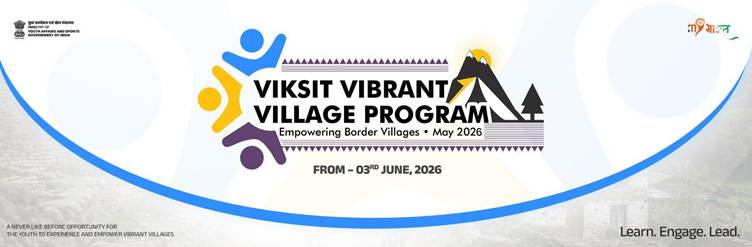
MY Bharat's June 2026 border-village programme ultimately covered 74 villages in Ladakh, Himachal Pradesh and Uttarakhand, according to a subsequent Prime Minister's Office account. It reported more than 400 young participants from across India's states and Union Territories, selected through a nationwide quiz entered by more than three lakh people.
That account placed the two phases between June 4 and 30. Participants lived with local communities, joined cleanliness and tree-planting drives, discussed government schemes, met artisans and took part in cultural exchanges. Mini Model Panchayat simulations added a structured exercise in local governance to the community visits, alongside youth gatherings and visits to strategically important institutions.
The launch notice issued on June 3 had described a larger planned cohort: 500 volunteers, divided equally between two phases. It listed 43 villages for the first and 50 for the second, while a headline referred to 100. The two phase figures add to 93. The later reported coverage of 74 is a different, retrospective figure, not a mathematical correction of that original plan.
At launch, the programme envisaged household surveys and participation in Gram Sabha activities during a week-long stay. These offered different ways to understand priorities: household questions capture individual circumstances, while a village meeting brings collective issues into discussion. The programme linked those encounters with local administration and security personnel through MY Bharat, the Home Ministry and the Indo-Tibetan Border Police.
The wider border-development policy explains why those local priorities matter. In a December 2024 parliamentary reply, the Home Ministry described the Vibrant Villages Programme's aim of giving residents sufficient incentives to remain in selected northern-border villages. Its interventions combined livelihood opportunities in tourism, horticulture and other activities with roads, energy and communications. The volunteer exercise offered exposure to communities facing those connected livelihood and infrastructure questions.