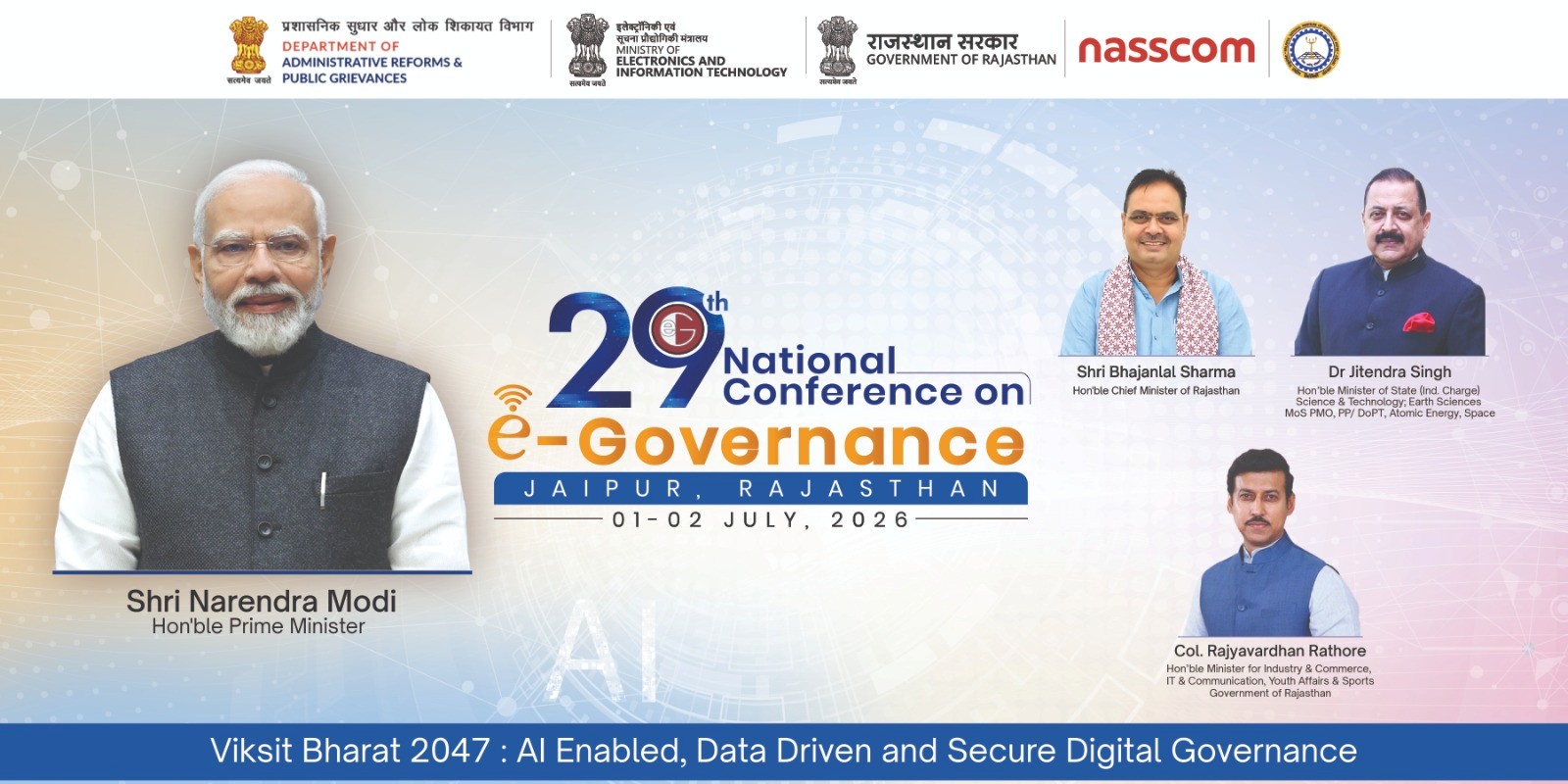
The July 1-2, 2026 National Conference on e-Governance in Jaipur brought together discussions on artificial intelligence, voice-based public services and digital access. Within that broad programme, an award-winning mental-health project provided a concrete example of technology changing the work assigned to different levels of a public service.
The Health Ministry's July 5 account confirmed a gold award for ICMR-MINDS in the category covering AI and other new technologies for citizen services. The ministry described MINDS as implementation research integrating mental-health and substance-use screening and management with care for other non-communicable diseases.
Its clinical decision-support system gives trained non-specialist workers structured screening, assessment and routine-management guidance. The ministry described referrals in both directions: patients can reach specialist services when needed, while stable patients can return to a nearby facility for follow-up. That return route is important because continuing care involves repeated contact, not simply an initial referral.
ICMR's own application listing identifies ASHAs, community health officers and medical officers among the intended users. It describes a pathway spanning community facilities, primary health centres and district hospitals, with standardised assessment tools and algorithms supporting identification, management and referral. The tool is consequently positioned inside a worker-led care pathway, rather than as a stand-alone consultation for consumers.
The division of responsibilities explains the project's relevance to digital governance. The application supports the frontline worker's assessment; a referral connects that assessment to another level of care. Useful information must therefore travel with the patient across facilities, instead of remaining confined to the first screening encounter.
The ministry also described offline operation, multilingual interfaces and administrative dashboards, with implementation through collaborating institutions in seven states. These features address different operational needs: local-language use at the point of contact, work where connectivity is limited, and visibility of service delivery for administrators. The award account presents that service design; it does not supply a measured clinical-effect estimate.