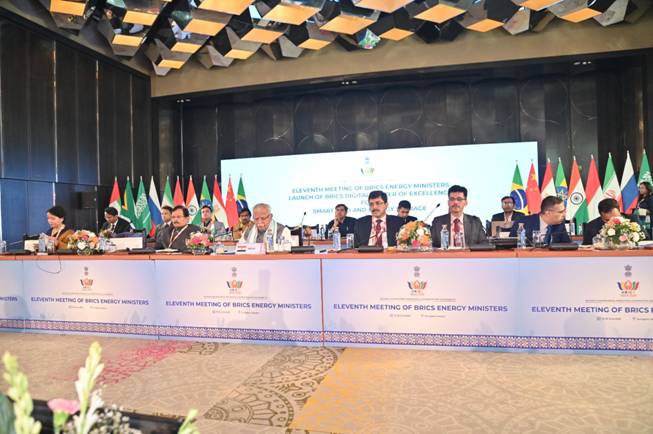
BRICS energy ministers launched a Digital Centre of Excellence for Smart Grids and Energy Storage at their Gurugram meeting on June 25, 2026. India's Power Ministry described it as a voluntary platform for research exchange, training, policy learning and pilot initiatives.
Smart grids and storage solve connected but different problems. Digital sensors and communications help operators understand grid conditions and respond to faults. Storage holds energy for use at a different time.
The US Department of Energy's technical explanation gives concrete examples: automated switches can route power around a fault, while batteries can make stored energy available when customers need it. These functions concern network operation, not simply the installation of more generating capacity.
The pairing is particularly relevant when the timing of generation and demand differ. Sharing experience on controls, storage and regulation can help countries assess how their networks accommodate changing power flows.
The June meeting also adopted guiding principles on smart grids and storage. Its collaboration model allows countries to compare approaches while retaining different national energy pathways; it is not a proposal for one shared BRICS electricity grid or a single generation mix.