The Election Commission's September 3, 2026 conference in Goa linked its ELC 2.0 campus programme to a practical question: how students find and use official election information. The fourth regional meeting brought together students and teachers from the state's educational institutions. Its proposed year-round club network would use a dedicated portal alongside ECINet, extending electoral education beyond a visiting official's address or a single question-and-answer session.
That digital connection rests on a platform launched nationally on January 22, 2026. The Commission described ECINet as combining more than 40 applications and portals, with access in 22 scheduled languages and English. For a campus learner, this changes the navigation problem: registration services, electoral-roll searches and application tracking can be approached within one service environment instead of being learned as unrelated destinations.
The January service list also included candidate information, downloadable electronic voter cards, grievance redressal and contact with election officials, including booking a call with a Booth Level Officer. These functions suggest a useful sequence for club exercises: locating information, identifying the relevant official and following a pending request. That is a more specific educational task than promoting an app download, because each step addresses a different point at which a voter may need assistance.
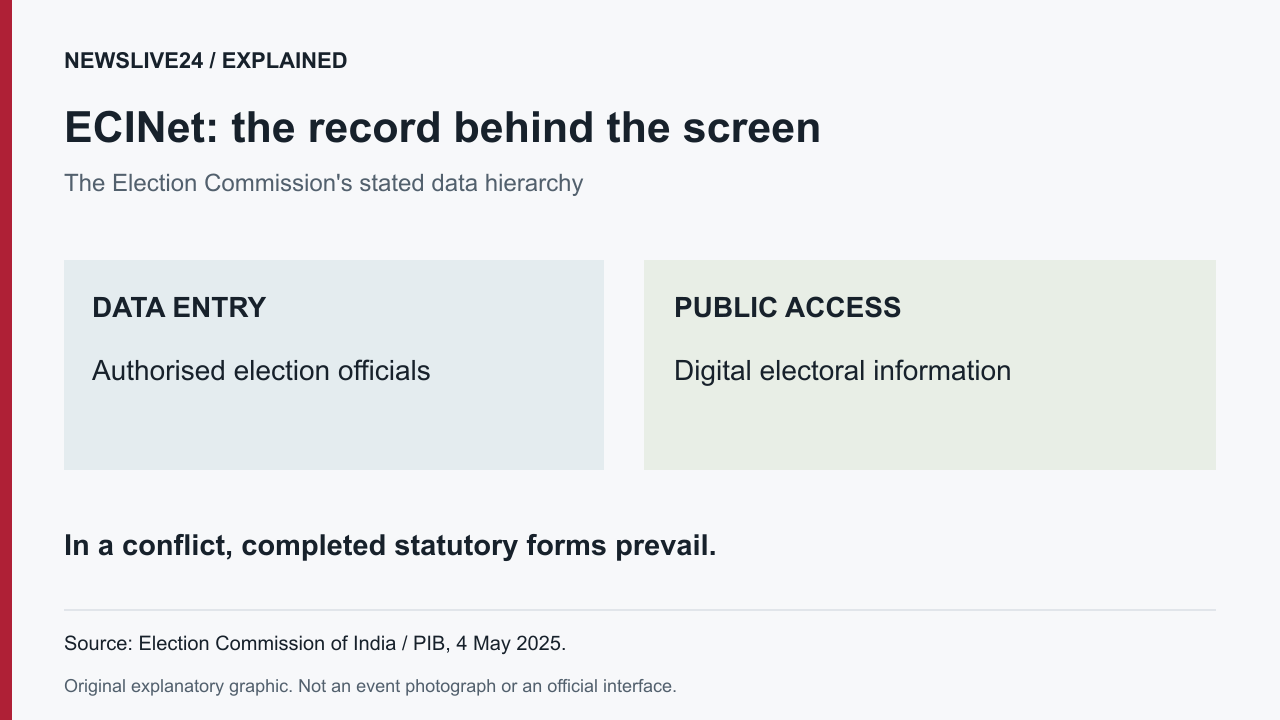
There is also an important distinction between easier access and the authority of the underlying record. In its May 2025 design announcement, the Commission said authorised officials would enter ECINet data and that duly completed statutory forms would prevail in a conflict. Read alongside the Goa programme, this provides a concrete information-literacy lesson: students need to understand where a displayed figure comes from, not simply how to reach it. A convenient interface does not remove the need to identify the official record behind the information.