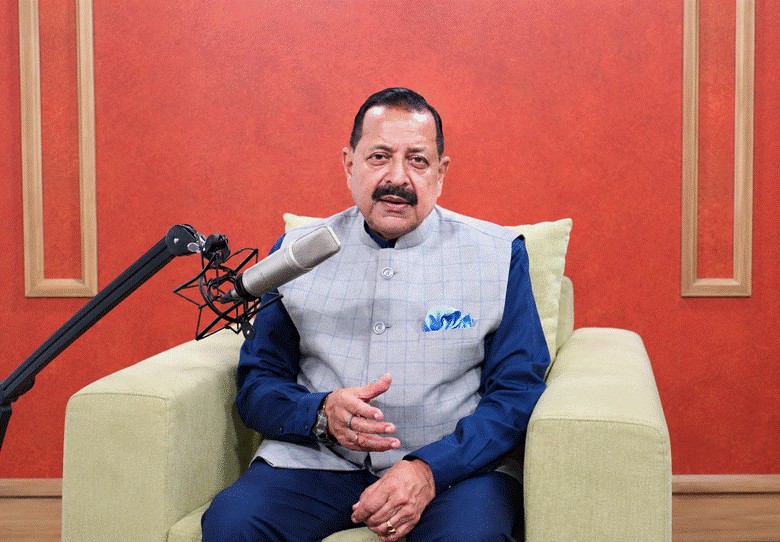
In a Doordarshan podcast reported on May 31, 2026, Science and Technology Minister Jitendra Singh argued that changes in India's research system had strengthened its prospects for 2047. His description of India as a technology leader was a political assessment, not a comparative scientific ranking.
Singh pointed to space businesses, nuclear research, biotechnology and quantum communication. The useful question is what the programmes are designed to deliver, and which results have actually been demonstrated.
The Department of Science and Technology's National Quantum Mission provides one concrete benchmark. Approved in April 2023, it has an allocation of Rs 6,003.65 crore through 2030-31. Its goals span computing, communication, sensing and materials, rather than a single technology.
Among the stated objectives are computers with 50-1,000 physical qubits and communication links over 2,000 kilometres. These describe different capabilities: a computing target cannot be used as a substitute for a communications result, and funding approval does not establish that either has been achieved.
Read against those objectives, the podcast sets out the government's case for its research direction. Establishing technical leadership would require results for particular systems and a defensible comparison with work elsewhere. The release does not provide that comparison, so the broader claim remains attributed to the minister.